

Introduction
For years, e-commerce brands focused on improving checkout pages. Faster websites, cleaner UI, one-click payments, shorter forms, everything revolved around reducing friction inside traditional funnels.
But consumer behaviour has started shifting.
People no longer want to move through rigid buying journeys. They want quick answers, instant reassurance, and conversations before making decisions. And increasingly, those conversations are happening on WhatsApp.
This is why WhatsApp Commerce is evolving from a support tool into a full-fledged conversion engine.
Today, customers discover products through ads, click into WhatsApp chats, ask questions, receive recommendations, and complete purchases, all within a messaging environment. The buying journey is becoming conversational rather than transactional.
This shift is driving the rise of conversational commerce, where brands use messaging platforms to guide customers from discovery to purchase in real time.
For many businesses, especially D2C brands, this is changing the role of checkout entirely. Instead of sending customers through multiple website pages, brands are building WhatsApp conversational funnels that simplify decisions and accelerate purchases.
The checkout page is no longer the centre of conversion.
What Is WhatsApp Commerce?
WhatsApp Commerce refers to the use of WhatsApp as a platform for product discovery, customer interaction, sales conversations, and transactions.
Initially, businesses used WhatsApp primarily for support and updates. Over time, however, it evolved into a powerful sales channel where customers could browse products, ask questions, receive recommendations, and complete purchases directly within chats.
This evolution has been driven by changing consumer expectations.
Modern customers prefer convenience and speed. They do not always want to fill out forms, navigate multiple pages, or wait for email responses. Messaging feels faster, simpler, and more personal.
This is why conversational commerce has gained momentum across e-commerce and service businesses alike.
Brands now use WhatsApp Business for sales in multiple ways:
- Product inquiries
- Lead qualification
- Cart recovery
- Appointment booking
- Customer support
- Repeat purchase campaigns
With the growth of the WhatsApp Business API for eCommerce, brands can now automate conversations, integrate payment systems, and scale customer interactions far beyond manual messaging.
What Is a Conversational Funnel?
Traditional sales funnels are linear.
A customer clicks an ad, lands on a website, browses products, adds to the cart, and eventually checks out. The journey is structured but often impersonal.
Conversational funnels for e-commerce work differently.
Instead of forcing users through predefined pages, they guide customers through interactive conversations. The customer asks questions, receives responses instantly, and moves toward purchase naturally.
A typical WhatsApp sales funnel usually includes:
- Entry through ads, QR codes, or website CTAs
- Automated or live conversation flow
- Product recommendations based on intent
- Objection handling and trust-building
- Checkout or payment assistance
- Post-purchase engagement
Unlike traditional funnels, WhatsApp conversational funnels adapt dynamically based on customer behaviour and responses.
That flexibility is what makes them powerful.
Why WhatsApp Is Becoming the New Checkout
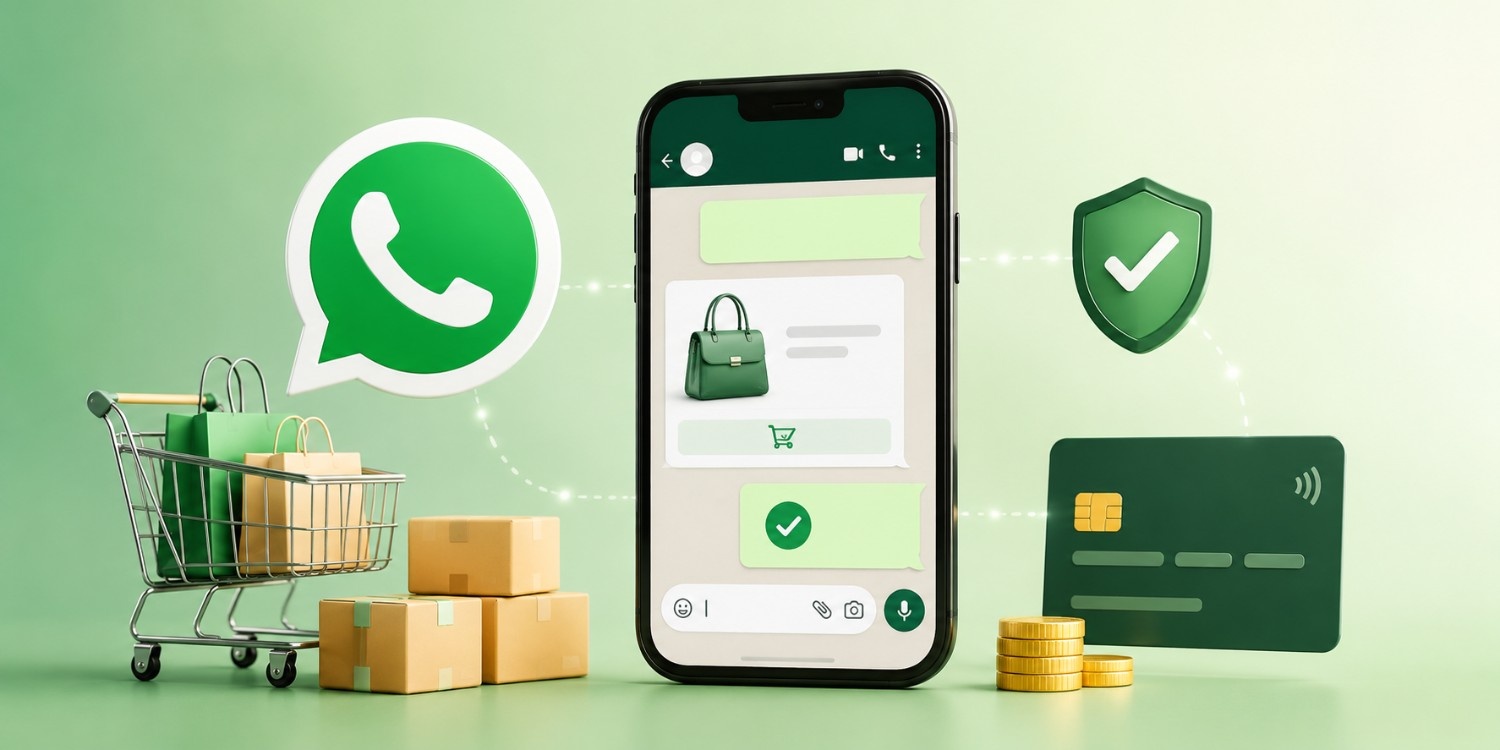
One of the biggest reasons behind the rise of WhatsApp Commerce is speed.
Traditional e-commerce checkouts often involve multiple steps. Product pages, cart pages, login requirements, payment forms, and delivery details all create friction.
Every additional step increases drop-offs.
Conversational buying journeys reduce that friction dramatically.
Instead of navigating a website, customers simply ask questions and receive guidance immediately. This creates faster decision-making and smoother conversion paths.
This is especially effective for products that require explanation, reassurance, or comparison before purchase.
Another major advantage is reduced cart abandonment.
Many customers abandon purchases because of confusion, hesitation, or unanswered questions. A conversational flow solves this in real time. Customers receive instant clarification instead of leaving the site to think about it later.
This is why brands increasingly use WhatsApp marketing automation to recover abandoned carts and re-engage hesitant buyers.
Real-time support also changes the buying experience significantly. Instead of relying on static FAQs, customers can interact directly with a brand during the purchase journey.
That interaction builds trust and trust improves conversions.
Key Elements of a High-Converting WhatsApp Funnel
A strong WhatsApp conversational funnel does not begin with automation. It begins with intent.
The first element is the entry point.
Customers typically enter the funnel through Click-to-WhatsApp ads, website buttons, QR codes, or social media campaigns. The entry experience needs to feel seamless and relevant.
The second element is intelligent product recommendation.
Instead of overwhelming customers with options, effective conversational funnels for e-commerce guide users toward suitable products through simple questions and responses.
The third element is conversational checkout.
This is where WhatsApp Commerce becomes powerful. Customers can confirm products, receive payment links, clarify doubts, and complete purchases without leaving the conversation.
Finally, post-purchase follow-up plays a major role.
Brands use WhatsApp marketing automation for order updates, feedback requests, upselling, repeat purchases, and customer retention. This extends the customer relationship beyond the first transaction.
WhatsApp Commerce Use Cases
The applications of WhatsApp Commerce extend far beyond customer support.
Many brands now use WhatsApp for lead generation through Click-to-WhatsApp ads that initiate conversations instantly.
Cart recovery is another major use case. Instead of sending reminder emails that often go unread, brands use conversational reminders that feel more direct and personal.
Repeat purchases are also becoming increasingly driven through messaging. Since WhatsApp already has high engagement rates, reactivation campaigns often perform better than traditional email flows.
For businesses with high-consideration products, WhatsApp Business for sales also improves consultation-based selling by enabling personalised conversations before purchase.
Common Mistakes Brands Should Avoid

While conversational commerce is powerful, many brands misuse it.
One common mistake is over-automation.
Customers can quickly recognise robotic flows that feel repetitive or irrelevant. Excessive automation often reduces trust instead of improving efficiency.
Poor response design is another issue. If conversations feel confusing or unnatural, customers disengage quickly.
Lack of personalisation also weakens results. Strong WhatsApp conversational funnels adapt to customer intent rather than forcing everyone through identical scripts.
The goal is not to replace human interaction completely.
It is to make conversations scalable without losing relevance.
The Future of WhatsApp as a Checkout Channel
The future of WhatsApp Commerce is moving toward fully integrated conversational buying experiences.
AI-powered conversations will make recommendations more intelligent and context-aware. In-chat payments will reduce friction even further, allowing customers to complete purchases without leaving WhatsApp.
As conversational commerce continues growing, brands will increasingly treat messaging platforms as primary conversion channels rather than secondary support tools.
This shift is especially important for mobile-first markets like India, where messaging behaviour is already deeply integrated into daily life.
Key Metrics to Measure WhatsApp Funnel Performance
Like any growth system, WhatsApp sales funnels need structured measurement.
Key metrics include:
- Click-to-chat rate
- Conversation-to-sale conversion rate
- Cart recovery rate
- Response time
- Customer acquisition cost (CAC)
- Customer lifetime value (LTV)
These metrics help businesses understand whether their WhatsApp conversational funnels are improving conversion efficiency or simply generating conversations without outcomes.
Conclusion
The role of checkout in eCommerce is changing.
Customers increasingly prefer conversations over complicated buying journeys, and brands that adapt early will have a significant advantage.
WhatsApp Commerce is no longer just a communication tool. It is becoming a complete conversion ecosystem powered by speed, convenience, and real-time interaction.
At TZS DIGITAL, we help brands build high-converting conversational funnels for e-commerce that combine automation, strategy, and customer psychology. From Click-to-WhatsApp campaigns to full-funnel WhatsApp marketing automation, our focus is on building systems that convert conversations into revenue.
Because the future of e-commerce may not belong to websites alone.
It may belong to the brands that know how to sell through conversations.
FAQs
What is WhatsApp Commerce?
WhatsApp Commerce refers to using WhatsApp for product discovery, customer conversations, sales, and transactions within a messaging-based buying experience.
How do conversational funnels work?
Conversational funnels guide customers through interactive chat-based journeys where questions, recommendations, and purchase decisions happen naturally through conversation.
Can customers complete checkout on WhatsApp?
Yes. With payment integrations and the WhatsApp Business API for eCommerce, customers can complete transactions directly within conversational flows.
How does WhatsApp reduce cart abandonment?
By providing instant support, reminders, and personalised engagement, WhatsApp conversational funnels reduce hesitation and improve purchase completion rates.
What is Click-to-WhatsApp advertising?
Click-to-WhatsApp ads direct users from platforms like Meta to WhatsApp chats, allowing businesses to start conversations instantly.
Are chatbots useful in WhatsApp Commerce?
Yes, when implemented correctly. WhatsApp marketing automation and chatbots help scale conversations, answer common questions, and improve response speed without losing efficiency.
