

Introduction
For years, product discovery followed a predictable path.
A customer identified a need, typed a search query into Google, browsed through websites, compared options, read reviews, and eventually made a purchase decision.
That journey is beginning to change.
Today, a growing number of consumers are skipping traditional search altogether and asking AI platforms directly. Instead of searching for “best running shoes for beginners,” they ask ChatGPT for recommendations. Instead of opening multiple tabs to compare skincare brands, they turn to Gemini or Perplexity and request a curated shortlist.
The shift may appear subtle, but its implications are significant.
For D2C brands, product discovery is no longer happening exclusively through search engines, marketplaces, influencers, or social media feeds. Increasingly, it is happening through conversations with AI.
This raises an important question: Can AI search replace traditional product discovery?
The answer is more nuanced than most brands realise. AI is unlikely to eliminate existing discovery channels overnight. However, it is already changing how customers research products, evaluate options, and make buying decisions.
For brands that depend on digital visibility, understanding AI Search for D2C Brands is quickly becoming a strategic priority rather than an experimental trend.
Why AI Product Discovery Feels Different

Traditional search engines present choices.
AI presents answers.
That distinction matters.
When customers use conventional search, they are responsible for comparing websites, evaluating products, and making sense of conflicting information. AI-powered search changes that experience by doing much of the research upfront.
Instead of reviewing ten different websites, a customer can receive a summarised recommendation within seconds.
This is why AI product discovery feels fundamentally different from traditional search behaviour.
The objective is not simply to find information. The objective is to reduce decision-making effort.
For consumers overwhelmed by endless product options, this convenience is becoming increasingly attractive.
As a result, many emerging D2C marketing trends are being shaped by how AI systems influence product consideration long before a customer visits a brand’s website.
The New Customer Journey Starts Before Google
One of the biggest misconceptions surrounding AI search is that it only affects the final stage of decision-making.
In reality, it is reshaping the entire D2C customer journey.
Historically, brands competed for visibility on search engines, social platforms, and marketplaces. Today, AI systems are increasingly acting as intermediaries between consumers and brands.
Consider a customer researching protein supplements.
Instead of visiting multiple websites, they may ask ChatGPT which brands are best for muscle recovery. They may then ask Perplexity for ingredient comparisons. Finally, they may use Gemini to understand pricing differences before making a purchase.
Throughout this process, the AI platform becomes the guide.
The brands that appear during these conversations gain consideration. The brands that do not remain invisible.
This is why AI-powered search is becoming an increasingly important customer acquisition channel for D2C businesses.
How AI Search Engines Decide Which Brands to Recommend
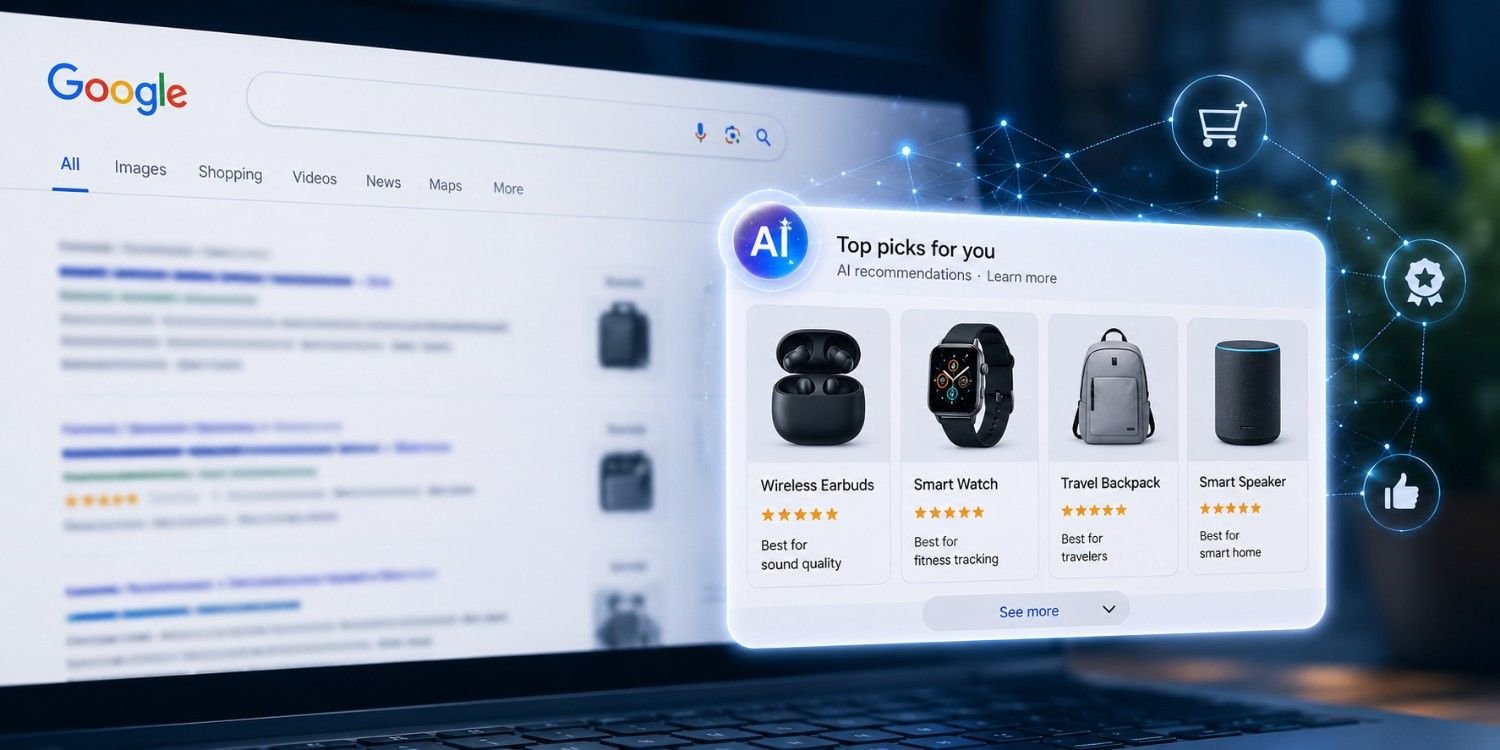
Unlike traditional search rankings, most AI search engines are not simply matching keywords.
They evaluate information differently.
When generating recommendations, AI systems often look for signals such as:
- Brand authority
- Consistent online mentions
- Product reviews
- Expert opinions
- Third-party citations
- Structured website content
- Trustworthy sources
This creates an interesting challenge for e-commerce businesses.
A brand can rank well on Google while remaining largely absent from AI-generated recommendations.
Similarly, a smaller brand with strong authority signals may appear frequently within AI responses despite having lower traditional search visibility.
This is why AI search optimisation is rapidly becoming an important extension of SEO rather than a replacement for it.
Why ChatGPT Product Recommendations Are Influencing Purchase Decisions
Many consumers now use AI as a research assistant before making purchases.
Instead of reading lengthy comparison articles, they ask direct questions.
They want product recommendations.
They want comparisons.
They want pros and cons.
They want clarity.
This behaviour is creating new opportunities for brands that understand how ChatGPT product recommendations are generated.
AI systems tend to favour brands that have a strong digital footprint. Companies frequently mentioned in trusted publications, review platforms, industry discussions, and authoritative content ecosystems are more likely to surface in AI-generated responses.
The implication is clear.
If AI cannot find enough evidence about your brand, it becomes difficult for AI to recommend your brand.
Will Generative AI Replace Traditional E-commerce Discovery?
Not entirely.
Consumers still browse social media. They still discover products through influencers. They still respond to advertisements and recommendations from friends.
However, Generative AI in e-commerce is introducing a new layer into the discovery process.
Instead of replacing channels, it is influencing how consumers navigate between them.
A customer may discover a product on Instagram but validate it through ChatGPT. Another customer may find a product recommendation in Perplexity before searching for reviews on YouTube.
The future is unlikely to be AI versus traditional discovery.
The future is AI-enhanced discovery.
This distinction is critical because it means brands must optimise for both human audiences and AI systems simultaneously.
What D2C Brands Must Do to Stay Visible

The brands that succeed in the next phase of product discovery in ecommerce will focus less on algorithm hacks and more on becoming authoritative sources within their category.
This starts with creating comprehensive content around customer problems rather than just product features.
It also means investing in reviews, PR, founder visibility, expert commentary, and industry thought leadership. AI systems frequently rely on external validation when determining credibility.
Product pages also need to evolve.
Many e-commerce websites still provide minimal information beyond specifications and benefits. AI retrieval systems perform better when product pages include detailed use cases, comparisons, FAQs, customer outcomes, and structured data.
These improvements support both traditional SEO and AI search optimisation, creating visibility across multiple discovery channels.
The Future of E-commerce Marketing Is Becoming Conversational
Perhaps the biggest change ahead is not technological.
It is behavioural.
Consumers are becoming more comfortable asking questions rather than searching for keywords.
This shift towards conversational discovery is likely to influence the entire future of e-commerce marketing.
Brands will increasingly compete not just for clicks, but for recommendations.
Not just for rankings, but for mentions.
Not just for traffic, but for trust.
As AI becomes a more prominent part of customer decision-making, visibility will increasingly depend on authority, credibility, and information quality.
The brands that understand this early will have a significant advantage.
Conclusion
AI search is not replacing product discovery.
It is redefining it.
Consumers still rely on multiple channels when making purchase decisions, but AI is becoming an increasingly influential guide throughout that process. Whether it is ChatGPT, Gemini, Perplexity, or future AI assistants, these platforms are shaping which products consumers consider and which brands they trust.
For D2C businesses, this means visibility can no longer depend solely on traditional SEO, paid advertising, or social media reach. Success increasingly requires building authority that both humans and AI systems recognise.
At TZS DIGITAL, we help brands prepare for this shift through content ecosystems, authority-building strategies, SEO, GEO, and AI Search for D2C Brands initiatives designed for the next generation of discovery.
Because in the age of AI, being searchable is no longer enough.
You need to be recommendable.
FAQs
What is AI-powered product discovery?
AI-powered search enables consumers to discover, compare, and evaluate products through AI-driven platforms such as ChatGPT, Gemini, and Perplexity, often receiving personalised recommendations instead of traditional search results.
Can AI search replace Google for product searches?
Not entirely. While AI search is becoming an important discovery channel, most consumers still use multiple sources before making purchase decisions. AI is more likely to complement than completely replace traditional search.
How does AI search affect D2C brands?
AI influences which products consumers see during the research and comparison stages. Brands that appear in AI-generated recommendations gain additional visibility, making AI Search for D2C Brands an increasingly important growth channel.
Which AI platforms are influencing product discovery?
Platforms such as ChatGPT, Gemini, Perplexity, Claude, and other emerging AI search engines are increasingly shaping how consumers research products and brands.
How can D2C brands optimise for AI search?
Brands can improve visibility through strong authority signals, high-quality content, structured product information, digital PR, customer reviews, and dedicated AI search optimisation efforts.
What is the future of AI-driven product discovery?
The future of AI product discovery is likely to become more conversational, personalised, and recommendation-driven, making AI an important part of the evolving D2C customer journey and the broader future of e-commerce marketing.
